
FORRT’s Research, Scholarship & Resources
Peer-reviewed research, tools, data, teaching materials, and policy resources advancing open and reproducible science.
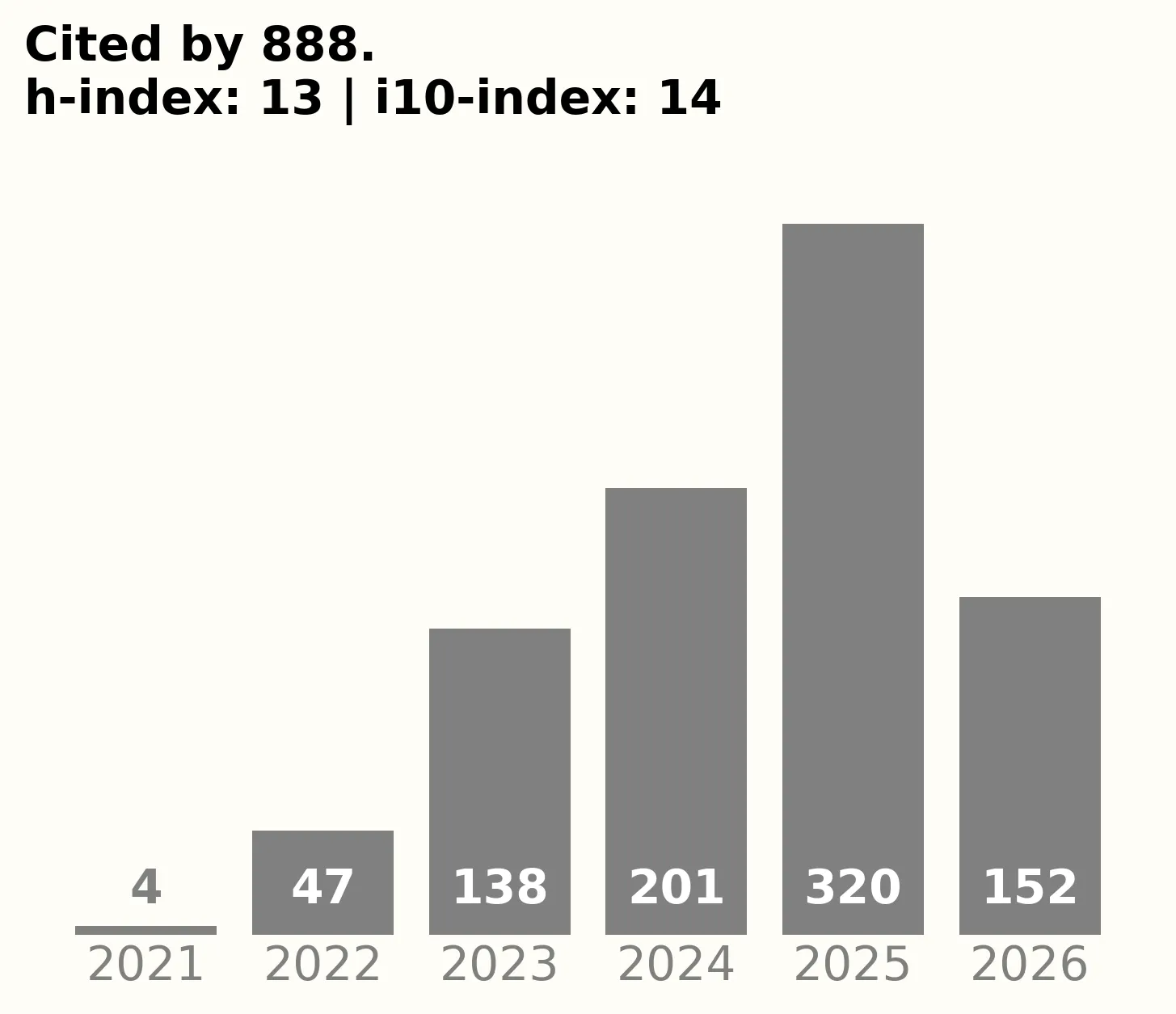
This page showcases the diverse scholarly and public-facing outputs produced by FORRT and its community—including peer-reviewed publications, preprints, policy briefs, opinion pieces, interactive apps, datasets, and open-source tools. It reflects our ongoing efforts to contribute to scientific discourse, inform policy, and promote open, inclusive, and transparent research practices. Whether you’re a researcher, educator, or policymaker, this hub provides access to FORRT’s evolving body of work. Dive in to discover, cite, or collaborate.
Academic peer-reviewed publications
No room at the inn? The case for dedicated replication journals
Replication is widely recognized as essential for scientific self-correction, yet published replications remain exceedingly rare in both economics and psychology. At the same time, large-scale collaborative replication efforts and growing attention to research transparency have revealed widespread reproducibility failures across empirical research. This article reviews evidence on the scarcity of published replications, examines why traditional journals continue to resist publishing them, and evaluates the “first-best” proposal that journals should publish replications of their own articles. It then surveys alternative models that journals have adopted, such as dedicated replication sections and special replication issues, and considers their limitations in overcoming structural barriers to replication. Because these approaches have not meaningfully expanded the publication of replications, the article argues that dedicated replication journals offer an essential and complementary solution. By providing a stable, credible, and visible home for replication work, these journals supply critical infrastructure for the self-correcting function of science.
Cite this
International Initiatives to Enhance Awareness and Uptake of Open Research in Psychology: A Systematic Mapping Review
We have written a manuscript, entitled International Initiatives to Enhance Awareness and Uptake of Open Research in Psychology: A Systematic Mapping Review, which outlines the global landscape of Open Science initiatives within psychology. This postprint provides a systematic review of 187 initiatives, categorized into procedural, structural, and community-based changes.
Cite this
A Community Model for Rigorous and Inclusive Scholarship
Reproducibility and replicability are vital for trustworthy, cumulative research, yet remain undervalued in most areas of academic publishing. Replication Research (R2) is a Diamond Open Access journal dedicated to publishing high-quality reproductions, replications, and related methodological work across disciplines. With robust standards for transparency, open peer review, and social responsibility, R2 offers practical guidance and support for authors. We aim to rebalance research culture by valuing diligence and robustness alongside innovation, thereby increasing confidence in research findings. We invite researchers to contribute to and benefit from an open, community-driven journal designed to elevate the status and impact of replications (repeated studies of published findings with different data) and reproductions (repeated tests of published findings with the same data). In this editorial, we introduce the aims, policies, and scope of Replication Research, outlining how the journal will operate and the values that guide it.
Cite this
Bridging Neurodiversity and Open Scholarship: How Shared Values Can Guide Best Practices for Research Integrity, Social Justice, and Principled Education
Not all people conform to socially constructed norms, nor should they have to. Neurodiversity, the natural variation in human brains and cognition, is fundamental to understanding human behavior, yet neurodivergent individuals in academia are often stigmatized, undervalued, or pressured to mask their differences. This position statement, authored predominantly by neurodivergent scholars, explores how aligning the values of the neurodiversity movement with practices of Open Scholarship (OSch) can foster greater research integrity, rigor, social responsibility and justice, diversity, equity, inclusivity, and accessibility in academia. We review systemic barriers faced by neurodivergent researchers—from disclosure dilemmas and hidden curriculum expectations to intersectional disadvantages—and identify how OSch principles (transparency, accessibility, collaboration) can help mitigate these challenges. Drawing on lived experiences and current research, we propose concrete reforms, including adopting universal design in scholarly communication, promoting participatory research methods, and enacting supportive policies (e.g., flexible work arrangements, inclusive codes of conduct). By leveraging shared values of openness and neuro-inclusion, academia can become more just and epistemically equitable. Our recommendations chart a path toward an academic culture where neurodivergent scholars can thrive openly, to the benefit of scientific rigor and social justice alike.
Cite this
An annotated introductory reading list for neurodiversity
Since its inception, the concept of neurodiversity has been defined in a number of different ways, which can cause confusion among those hoping to educate themselves about the topic. To address such barriers, we present an annotated reading list that was developed collaboratively by a neurodiverse group of researchers.
Cite this
The Replication Database: Documenting the Replicability of Psychological Science
We have written a manuscript about documenting and tracking replication efforts. In psychological science, replicability is critical for affirming the validity of scientific findings. Addressing this crucial gap, we present the Replication Database, a novel platform hosting >1,200 original findings paired with replication findings.
Cite this
Teaching open and reproducible scholarship: a critical review of the evidence base for current pedagogical methods and their outcomes
In recent years, the scientific community has called for improvements in the credibility, robustness and reproducibility of research, characterized by increased interest and promotion of open and transparent research practices. While progress has been positive, there is a lack of consideration about how this approach can be embedded into undergraduate and postgraduate research training. Specifically, a critical overview of the literature which investigates how integrating open and reproducible science may influence student outcomes is needed. In this paper, we provide the first critical review of literature surrounding the integration of open and reproducible scholarship into teaching and learning and its associated outcomes in students. Our review highlighted how embedding open and reproducible scholarship appears to be associated with (i) students’ scientific literacies (i.e. students’ understanding of open research, consumption of science and the development of transferable skills); (ii) student engagement (i.e. motivation and engagement with learning, collaboration and engagement in open research) and (iii) students’ attitudes towards science (i.e. trust in science and confidence in research findings). However, our review also identified a need for more robust and rigorous methods within pedagogical research, including more interventional and experimental evaluations of teaching practice. We discuss implications for teaching and learning scholarship.
Cite this
The Replication Crisis Has Led to Positive Structural, Procedural, and Community Changes
We have written a manuscript entitled The replication crisis has led to positive structural, procedural, and community changes. This manuscript reviews how research structures, procedures and communities have changed in response to the replication crisis, showing that the replication ‘crisis’ has been a positive credibility revolution.
Cite this
Participatory Research Primer
We have written a manuscript entitled Opening up understanding of neurodiversity: A call for applying participatory and open scholarship practices. This manuscript gives a brief overview of what participatory research methods are and why they are important for promoting neurodiversity in academia.
Cite this
FORRT’s Glossary
In response to the varied and plural new terminology introduced by the open scholarship movement, we have produced a community and consensus-based Glossary to facilitate education and effective communication. This manuscript presents the beta 0.1 version of our glossary.
Cite this
The Role of Pedagogical Communities
We have written a manuscript entitled Towards a culture of open scholarship: The role of pedagogical communities describing the need to integrate open scholarship principles into research training within higher education.
Cite this
FORRT’s Lesson Plans
We compiled lesson plans and activities, and categorized them based on their theme, learning outcome, and method of delivery, which are made publicly available.
Cite this
Preprints
In Pursuit of Citational Justice: A Toolkit for Equitable Scholarship
This paper unpacks the concept of citation politics and its role in sustaining epistemic hierarchies within scholarly communities. We introduce a comprehensive and openly accessible Citational Justice Toolkit.
Cite this
Tracking and mainstreaming replications in the social, cognitive, and behavioral sciences
Replicability is a cornerstone of scientific progress. Yet, replications are often undervalued, and are sometimes seen as redundant, unimportant, or lacking novelty. This impedes their broader adoption in research and beyond. In response, the credibility revolution calls for slower, more deliberate science and greater responsiveness to fallibility. In this perspective piece, we argue that (a) replications are essential for validating scientific claims, (b) replications need to be made more visible, recognized, and integrated into research and educational practices, and (c) we can change the way we view and judge replication results. We propose a framework where replication studies can be systematically tracked and normalized through the Replication Hub as part of the Framework for Open and Reproducible Research Training (FORRT) initiative, with the goal of enhancing the visibility, integration, and cumulative impact of replication research across disciplines.
Cite this
How to Develop and Use Open Educational Resources
This chapter explores the critical role of Open Educational Resources (OERs) in advancing open science and promoting educational equity. OERs are freely-available teaching and learning materials that can be reused and adapted, making them powerful tools for democratising access to knowledge. Drawing on principles from critical pedagogy, feminist, and decolonial scholarship, we position OERs not only as cost-saving tools but as instruments of epistemic justice and inclusion. This chapter outlines five foundational principles for OER development—accessibility, inclusivity, collaboration, sustainability, and social justice—and offers a step-by-step framework for creating, implementing, and sustaining high-quality OERs. Case studies are presented to demonstrate participatory and community-driven approaches to OER creation. We also examine common challenges such as structural inequality and linguistic barriers, providing actionable strategies for addressing each. By embedding values of openness, fairness, and co-creation, we show how OERs can help reshape curricula and cultivate more inclusive academic ecosystems.
Cite this
Neurodiversity & Open Scholarship in Academia
We have written a manuscript entitled Bridging Neurodiversity and Open Scholarship: How Shared Values Can Guide Best Practices for Research Integrity, Social Justice, and Principled Education explaining that Neurodiversity is fundamental to the understanding of human behaviour and cognition.
Cite this
FORRT’s Manifesto
We have written a manuscript entitled Introducing a Framework for Open and Reproducible Research Training (FORRT) describing the importance of integrating open scholarship into higher education.
Cite this
Making Open Science Multilingual: Lessons from the Turkish Adaptation of FORRT’s Open Science Glossary
In response to the replication crisis, a significant number of structural and procedural changes have been made in how scientific research is conducted. Of these changes, open science practices, in particular, have been seen as a panacea for improving transparency, reproducibility, and accessibility in research. However, engaging in such reforms is not equally possible for everyone in academia, partly due to dominant resources being available in the English language. This situation results in a linguistic power asymmetry that creates and perpetuates structural barriers for researchers, educators, and students working in non-English contexts, overall limiting their efforts to take part in global scientific discourse. Using the frameworks of open science, linguistics, and epistemic justice as an organizing point, this article reports and reflects on translating the Open Science Glossary of the Framework for Open and Reproducible Research Training (FORRT) into Turkish, conducted as part of a multilingual initiative. Our team of five researchers carried out a collaborative translation process and translated approximately 250 open science terms. Translation decisions, particularly for terms without established Turkish equivalents, were debated collectively, and final decisions were made by considering the principles of clarity, accuracy, accessibility, and adaptation. We argue that translating terminology is an act of epistemic inclusion that supports capacity building, teaching, and research reform, rather than simply being a technical necessity. By localising open science concepts in the Turkish language, our work contributes to more inclusive and globally representative open science efforts.
Cite this
Op-Eds and Other Media
Unveiling the Truth in Science
For the Official PLoS Blog, on creating a comprehensive, dynamic database cataloging scientific claims and subsequent replication attempts across various disciplines of social, cognitive, and behavioral sciences.
Cite this
Open Scholarship Pedagogical Communities
For The Psychologist, on open scholarship pedagogical communities.
Cite this
Letter to UNESCO’s Principles of Open Science Monitoring
The Letter to UNESCO’s Principles of Open Science Monitoring.
Cite this
Navigating Academia as Neurodivergent Researchers
For the Observer, of the Association for Psychological Science, on Navigating Academia as Neurodivergent Researchers.
Cite this
What is ‘Open Science’? And why does it need a glossary?
For In-Mind Magazine, on What is Open Science and Why Does It Need a Glossary.
Cite this
Educating in the Open Scholarship Era
For the Center of Open Science Blog, on Integrating Open and Reproducible Science Principles into Higher Education.
Cite this
Policy Briefs
Open Scholarship in QAA Briefing
FORRT was asked by the UK’s Quality Assurance Agency for Higher Education (QAA) to produce a short briefing note in collaboration with the UK Reproducibility Network (UKRN).
Cite this
Building Community (UK Parliament)
FORRT responded to the call from the UK House of Commons Science and Technology Committee for evidence on reproducibility and research integrity.
Cite this
Briefing Note for Degree Accrediting Societies
We have written to UKRN (UK’s Reproducibility Network) and the British Psychological Society (BPS) a short note on our organization and goals.
Cite this
FORRT affiliated projects
A scoping review on metrics to quantify reproducibility
Since no standardized approach to measuring reproducibility exists, a diverse set of metrics has emerged and a comprehensive overview is needed. We conducted a scoping review to identify large-scale replication projects that used metrics and methodological papers that proposed or discussed metrics.
Cite this
The Potential of Preregistration in Psychology
We used an extensive protocol to assess the producibility of preregistrations and the consistency between preregistrations and their corresponding papers for 300 psychology studies.
Cite this
Towards FAIRification of learning resources and catalogues—lessons learnt from research communities
Since the introduction of the FAIR (Findable, Accessible, Interoperable and Reusable) data principles in 2016, discussions have evolved beyond the original focus on research data to include learning resources. In 2020, a set of simple rules to FAIRify learning resources was proposed, building on existing expertise within the training community. Disciplinary communities have played an important role in advancing FAIR principles for learning resources, although they have approached FAIRification activities in different ways. These communities range from volunteer-led to funded and independent organisations, however commonly include activities such as organising training and capacity building, and coordinated discussions on disciplinary-focused FAIR best practices and standards.
Cite this
Work in Progress
Open Social Psychology
Social psychology is built on a strong set of classical research paradigms and findings… This book is dedicated to tracing some of these changes, and to offering a version of record of the changing perceptions and interpretations of classic social psychology.